

When planning to buy a home in Turkey, the advertised property price is only one part of the total budget. International buyers should also allow for title deed charges, taxes and administrative expenses as well as possible translation, notary, legal and insurance costs.
Understanding these expenses before committing to a purchase makes the financial side of considerably easier to manage.
Some costs are determined by legislation or official tariffs, while others depend on the property, transaction, service provider and individual circumstances. For this reason, buyers should avoid relying on old online guides that quote fixed amounts in US dollars or euros.
This 2026 guide explains the main costs international buyers should consider when purchasing property in Turkey.
One of the most important costs associated with a property purchase is the title deed transfer fee, commonly referred to as the Tapu harcı.
Under the applicable rules, a fee of 2% is calculated separately for the buyer and seller on the relevant declared transaction value, subject to the rules governing the value used for the calculation.
This produces a total statutory title deed transfer charge equivalent to 4% when both sides are considered.
However, buyers should distinguish between the total statutory liability for the transaction and the amount they have personally agreed to pay.
The purchase agreement should clearly establish how transaction expenses will be handled between the parties.
The declared property value is also important. Buyers should not deliberately declare an artificially low purchase price simply to reduce title deed costs.
For more information about ownership registration, see our Title Deed in Turkey guide.
In addition to the title deed transfer tax, transactions can involve administrative service charges collected within the Land Registry and Cadastre system.
These should not be presented as a permanent fixed amount in foreign currency.
The General Directorate of Land Registry and Cadastre publishes applicable revolving fund tariffs, and the amount can depend on the type of transaction and relevant local coefficient.
A buyer should therefore obtain the current figure for the specific transaction rather than relying on an old article stating that Tapu registration always costs a particular number of dollars.
DASK is Turkey's compulsory earthquake insurance system.
For properties falling within the scope of compulsory earthquake insurance, the existence and validity of the policy are checked for relevant title deed transactions.
The cost of a DASK policy is not a universal fixed amount.
The premium depends on factors used by the insurance system, so buyers should obtain a current quotation for the property they intend to purchase.
Our dedicated DASK Insurance in Turkey guide explains this requirement in greater detail.
Notary expenses may arise during a property purchase, but there is no sensible single fixed notary amount that can be applied to every foreign buyer.
The cost depends on which notarial services are actually required.
For example, an international buyer may require notarised documents, certified translations or a power of attorney.
A buyer purchasing remotely may have different notary expenses from someone who personally attends every stage of the transaction.
For this reason, notary costs should be calculated according to the documents and services required for the individual purchase.
Buyers who intend to appoint another person to act for them should also read our Power of Attorney in Turkey guide.
International buyers who do not speak Turkish may require translation services during parts of the purchase process.
The exact cost depends on the language, documents, length and type of service required.
Translation expenses should therefore be treated as variable costs rather than quoted as a permanent fixed figure.
Buyers should also distinguish between ordinary translation and situations in which an officially accepted or sworn translation is required for a formal transaction.
Using a lawyer is a separate professional service and the fee can vary according to the scope of work.
Legal services might include reviewing ownership records and contracts, checking the legal position of a property, examining documentation or representing a purchaser under an appropriate authority.
Not every transaction has exactly the same legal requirements.
International purchasers who choose to obtain independent legal advice should ask the lawyer to explain the scope and fee structure before instructing them.
Legal fees should therefore not be represented as an official government charge.
Foreign buyers should also consider the banking side of the transaction.
For applicable purchases, the foreign currency procedure and Döviz Alım Belgesi, commonly known as DAB, form an important part of the purchasing process.
Bank transfer charges, currency conversion costs and differences in exchange rates can affect the buyer's final expenditure.
For a detailed explanation of this procedure, see our Foreign Currency Exchange for Property in Turkey guide.
When transferring a substantial purchase amount internationally, buyers should plan the banking process in advance rather than waiting until immediately before the Tapu appointment.
Depending on the buyer, property and purpose of the transaction, additional documentation or professional services may also be required.
These can create additional expenses that are not identical for every purchase.
A transaction connected with financing, a particular legal structure or an application for Turkish citizenship, for example, can have different requirements from a straightforward cash purchase.
This is why a reliable cost calculation should be based on the actual property and transaction rather than a generic percentage copied from an older property guide.
Professional real estate services should be distinguished from government taxes and official Tapu charges.
If an agency or another professional service provider charges a fee, its amount and the services covered should be made clear to the buyer before the transaction.
An agency service fee is not the same thing as title deed tax, DASK or a government administrative charge.
Keeping these categories separate makes it much easier for an international buyer to understand the real cost of the transaction.
The financial structure of a new-build or off-plan purchase can differ from that of a completed resale property.
Depending on the project and sales structure, buyers should establish which expenses are included in the advertised price and which remain payable separately.
Payment plans, contract arrangements, delivery conditions and ongoing complex charges should also be reviewed before committing to a new development.
Buyers considering a newly constructed home can explore New Build Property in Turkey while comparing the complete financial terms rather than only the headline property price.
The purchase costs are not the only expenses a property owner should consider.
After becoming the registered owner, there can be ongoing expenses associated with owning and maintaining the property.
Depending on the property, these may include annual property-related taxes, DASK renewal, other insurance, utilities, site or complex maintenance fees and general property maintenance.
A villa with a private pool and garden will naturally have a different ongoing cost structure from an apartment in a residential complex.
For investment buyers, these expenses should be included when calculating the realistic net return from a property.
The basic national framework applies when purchasing property in destinations such as Antalya and Belek, but individual transaction and ownership costs can still differ according to the property.
Someone searching Property For Sale In Antalya may be comparing apartments, villas and new developments with very different ownership structures and running expenses.
Likewise, buyers exploring Belek Property should consider more than the purchase price alone.
Belek attracts international buyers for holiday homes, permanent living and its internationally recognised golf environment. Buyers initially researching Golf In Belek or Golf Property In Belek should therefore include acquisition and ongoing ownership costs when comparing properties.
There is no single percentage that accurately represents every property purchase in Turkey.
Older guides sometimes recommend adding a fixed percentage such as 8%, 8.5% or 10% to the property price. While a general contingency budget can be useful, presenting one percentage as the definitive cost of buying property can be misleading.
The final amount depends on factors such as the declared transaction value, allocation of title deed charges between the parties, current administrative tariffs, required professional services, insurance, banking arrangements and the specific property.
A better approach is to prepare a transaction-specific cost statement before committing to the purchase.
International buyers should know not only the price of the property but also what they are expected to pay before, during and after the ownership transfer.
Before signing or transferring substantial funds, ask for a clear breakdown separating the property price, official taxes and charges, professional services and any property-specific expenses.
This makes it easier to compare different homes and reduces the risk of unexpected costs near the Tapu appointment.
Buyers who are still learning how the complete purchase procedure works should begin with our Buying Property in Turkey guide.
When you are ready to compare actual homes and investment opportunities, you can then explore Property For Sale In Turkey with a clearer understanding of the total purchasing budget.
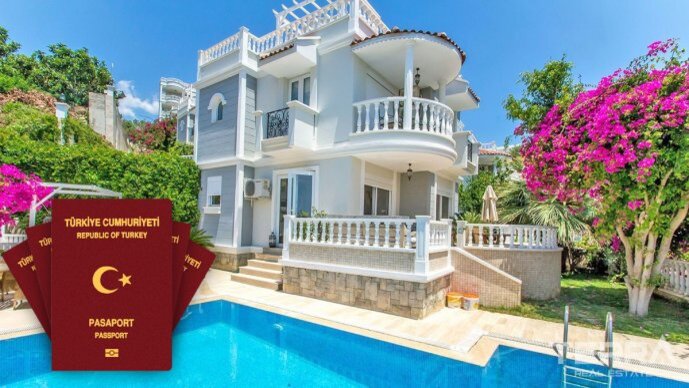
Turkish Citizenship Through Property Investment in 2026Turkey provides an exceptional citizenship route for qualifying foreign investors, ...

Residence Permit in Turkey Through Property OwnershipForeign nationals who purchase a home in Turkey often ask whether owning property gives them the right to obtain a Turkish residence permit.Propert...