

When considering investing in property in Turkey, it can initially feel overwhelming to commit such a significant amount in a foreign country. This guide is designed to address many of the key questions you may have before beginning your journey toward owning your dream home in Turkey.
Yes—most foreign buyers are permitted to own property in Turkey. This is based on a reciprocity principle: foreign nationals are allowed to buy property provided that Turkish citizens are permitted to purchase property in the buyer’s home country. This generally covers many countries across the Middle East and Europe.
Yes—Turkey offers attractive property prices along with a fantastic climate, beautiful beaches, and welcoming communities. These features have driven strong interest among foreign investors, particularly from the Middle East. Increasingly, architects and designers are choosing Turkey as a platform to showcase their work.
Here are the typical costs associated with purchasing property in Turkey:
Agency commission: Legally, 2% is paid by the buyer and 2% by the seller, calculated on the registered sale price at the Title Deed Office.
Title deed transfer tax (Tapu harcı): 4% of the declared property value.
Revolving fund (Döner Sermaye) fee for foreign buyers: An additional cadastral charge of approximately €500–700, depending on the region.
Notary fees (if a Power of Attorney is required): €300–400.
Passport translation and notary + sworn translation fees: Approximately €75 per person.
Lawyer fees (optional): Although not mandatory, engaging a lawyer is recommended and typically costs between €3,000–5,000.
These expenses make property purchases in Turkey more affordable compared to many other countries.
No, hiring a solicitor is not mandatory in Turkey. Buyers are fully capable of handling their own Title Deed transactions at the relevant Land Registry Office.
Once a property is selected, the buyer may handle the legal paperwork personally or appoint a representative with power of attorney. The process generally includes:
Paying a reservation deposit, typically between £1,000–2,000.
Scheduling a date for the remainder of the payment—usually 10–30% of the purchase price—ensuring you have a Turkish tax number and bank account.
Finalizing the purchase by paying all remaining costs, including taxes and fees, and completing the contract.
Submitting paperwork for military clearance.
Issuance of the Title Deed (Tapu) in the buyer’s name.
Typically, the purchasing process takes between 8 and 12 weeks. Recent regulatory changes have expedited the issuance of Title Deeds for foreign buyers.
Foreign buyers can apply for a mortgage in Turkey, ideally before making an offer. Alternatively, financing through existing assets in the buyer’s home country is a common and practical approach.
You will need the following documents:
Turkish tax identification number
Valid passport (with sworn Turkish translation if needed)
Turkish bank account
Passport-sized photos (typically 4–6)
If you sell your property after owning it for more than five years, you are exempt from capital gains tax. Selling earlier may incur a sliding-scale tax of up to 15%.
Creating a will is optional, but advisable for peace of mind. If you reside outside Turkey, your home country will’s inclusion of Turkish property is helpful, and you may also choose to register a separate will in Turkey.
Direct debit is the most convenient method for paying utilities and other bills. It ensures payments are made reliably even when you’re away. Insurance can often be arranged through European providers.
Yes, renting is permitted. Average annual rental yields range from 6% to 10%, depending on location, property size, and seasonality. Many agencies facilitate rental management.
Yes—if you intend to stay in Turkey longer than 90 days within a 180-day period, you must obtain a residency permit. The application must be submitted within your first month in the country and requires documents such as your Title Deed or rental agreement, passport identifying your entry date, photographs, proof of funds, and health insurance if aged between 18 and 65.
A work permit may be applied for after receiving a residency permit. It requires similar documentation, plus an application submitted to the Ministry of Labour and Social Security. Upon approval, your passport will be stamped accordingly.
Private healthcare in Turkey offers high quality at lower costs than many European countries. European health insurance is often accepted. Specialized clinics and well-organized public ambulance systems are widely available.
Yes. Pets such as dogs, cats, or birds can be brought into Turkey with proper documentation, including vaccination certificates (e.g., rabies), an international health certificate issued no more than 15 days before travel, a statement from a licensed veterinarian (animal must be older than 3 months), and identification such as a pet passport or ID. No quarantine is required if documentation is complete.
Turkey's climate varies by region. Coastal areas by the Mediterranean and Aegean offer hot, dry summers and mild winters, while inland regions experience more extreme temperatures. Spring and autumn typically offer the most enjoyable weather.
Many airlines, including budget carriers, fly to Turkey, making travel affordable and accessible. Popular options include SunExpress, Corendon, TUI, Jet2, EasyJet, and Turkish Airlines. Istanbul's recently expanded airport is one of the world’s largest and serves as a major hub. Travelers from GCC countries often connect through Istanbul before reaching Antalya, Bodrum, or Fethiye.
Conduct thorough research on the developer or agent.
Seek recommendations and avoid rushed decisions.
With proper preparation and due diligence, your Turkish property acquisition can become a reality.
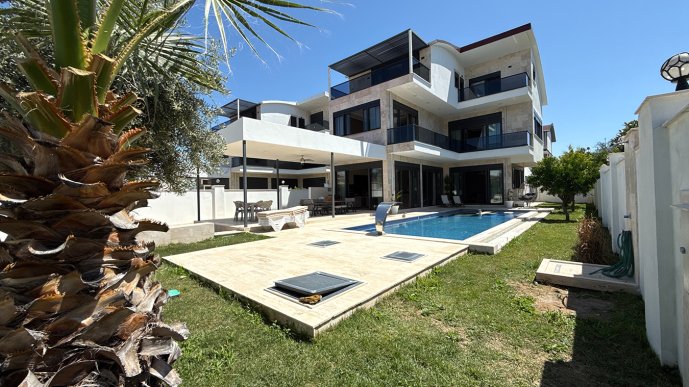
If you want to build your own private house in Antalya, there is no better option than Belek. Antalya Belek is an excellent investment a...

Anyone who buys a property in Turkey must get DASK Insurance. Dask Insurance is an insurance policy that covers a householder in the eve...